Amanda Godbold

My academic story
I’ve always needed to understand how things fit together. As a kid, that meant taking things apart and asking endless questions. Today it means standing in front of an outcrop and working out how it formed, or studying a fossil reef to understand how that community lived and changed over time. I’m dyslexic, and I was diagnosed with learning disabilities at a young age. The dyslexia itself was rarely the hardest part. The hardest part was what people assumed it meant. Many people believe that if reading and spelling don’t come easily, learning won’t either, and that a kid with a learning disability isn’t likely to become a scientist. I was underestimated often, and the limits other people set for me were sometimes a bigger challenge than the dyslexia. Dyslexia affects how the brain processes written language. It says nothing about intelligence, curiosity, or scientific ability. Confusing the two has pushed a lot of talented people away from science. Early on, I learned to trust what I knew I could do, even when others doubted it, and to find my own way when the usual approach didn’t fit. That habit of solving problems on my own terms has become one of my most valuable skills. Over time, I also realized that the way my brain works is an advantage. I think visually and in three dimensions. I pick up on connections quickly. I’m comfortable holding a large, complex system in my head and working out how it changes over time. Research on dyslexia describes these as common strengths, and reading about them helped me make sense of why certain things have always come naturally to me. These are exactly the skills my work relies on. As a geologist, I reconstruct three-dimensional structures from a flat rock face and piece together events spanning millions of years. As an ecologist, I study how species interact, how communities respond to change, and how small shifts ripple through an entire system. I don’t do good science in spite of how my brain works. I do good science because of it. This is a big part of why I care about mentorship. I want students who learn differently to know that other people’s expectations don’t define their limits, and that science needs the way they think.
Photograph taken by Tanner Strachan

Dr. Charles Henderson

Dr. David Bottjer
Exceptional mentors
I am privileged to introduce the extraordinary mentors who have been unwavering pillars of support throughout my journey. Their guidance and unwavering belief in my potential have been transformative. These amazing individuals not only provided invaluable insights but also offered unconditional encouragement, allowing me to navigate challenges and pursue my aspirations with confidence. Their mentorship has been a source of inspiration, shaping my growth and contributing significantly to my personal and professional development. I am deeply grateful for the wisdom, guidance, and unwavering support these mentors have generously bestowed upon me.

Dr. William Foster

Dr. Shane Schoepfer
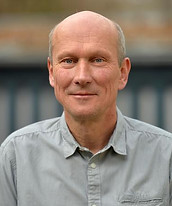

Dr. Frank Corsetti
Dr. Wolfgang Kießling

Dr. John Pandolfi

Dr. Sean Connolly

Dr. Aaron O'Dea